
A Taster to Smart Food Supply Chains
Have you wondered how global food supply chains have become efficient and resilient over the years? It’s because of modern technologies such as Artificial Intelligence (AI) which plays a crucial role in nourishing the world’s growing population. AI optimizes logistics, and reduces waste and costs, while predictive analytics help forecast demand and respond to disruptions quickly. By leveraging data-driven insights, AI promotes sustainability and ensures a reliable food supply. It benefits all stakeholders in the value chain such as producers, distributors, retailers, and consumers, creating a more agile and responsive ecosystem.
This is where the concept of Smart Food Supply Chains comes into play, utilizing a blend of modern technologies such as Artificial Intelligence (AI) to address challenges within food supply chains. Smart Food Supply Chains integrate technology and data to improve efficiency, traceability, and responsiveness from farm to table. Their goals include minimizing waste, enhancing sustainability, and ensuring food safety.
Key objectives by leveraging these technologies involve real-time monitoring, predictive analytics, and agile logistics to meet consumer needs while optimizing resource use throughout the supply chain.
In a world of constant change, Artificial Intelligence (AI) optimizes all dimensions of the global supply chain such as production, distribution, and inventory management, lowering waste and costs. Furthermore, it strengthens supply chains against disruptions, ensuring food security, sustainability, and a more environmentally friendly global food distribution system.
Demand for Smart Food Supply Chains
Globalization and interconnected supply chains have led to complex disruptions in global value chains, caused by various factors including natural disasters, climate events, geopolitical conflicts, and economic crises. Recent advancements in AI, offer new opportunities for effectively forecasting and managing these disruptions.
These technologies allow organizations to effectively manage disruptions like COVID-19 on food supply chains, achieving food security in the face of climate change, leveraging predictive models in agriculture, and assessing how disruptions affect food price volatility. These insights offer valuable guidance for policymakers and researchers seeking to enhance food security amid uncertainties and disruptions in global value chains.
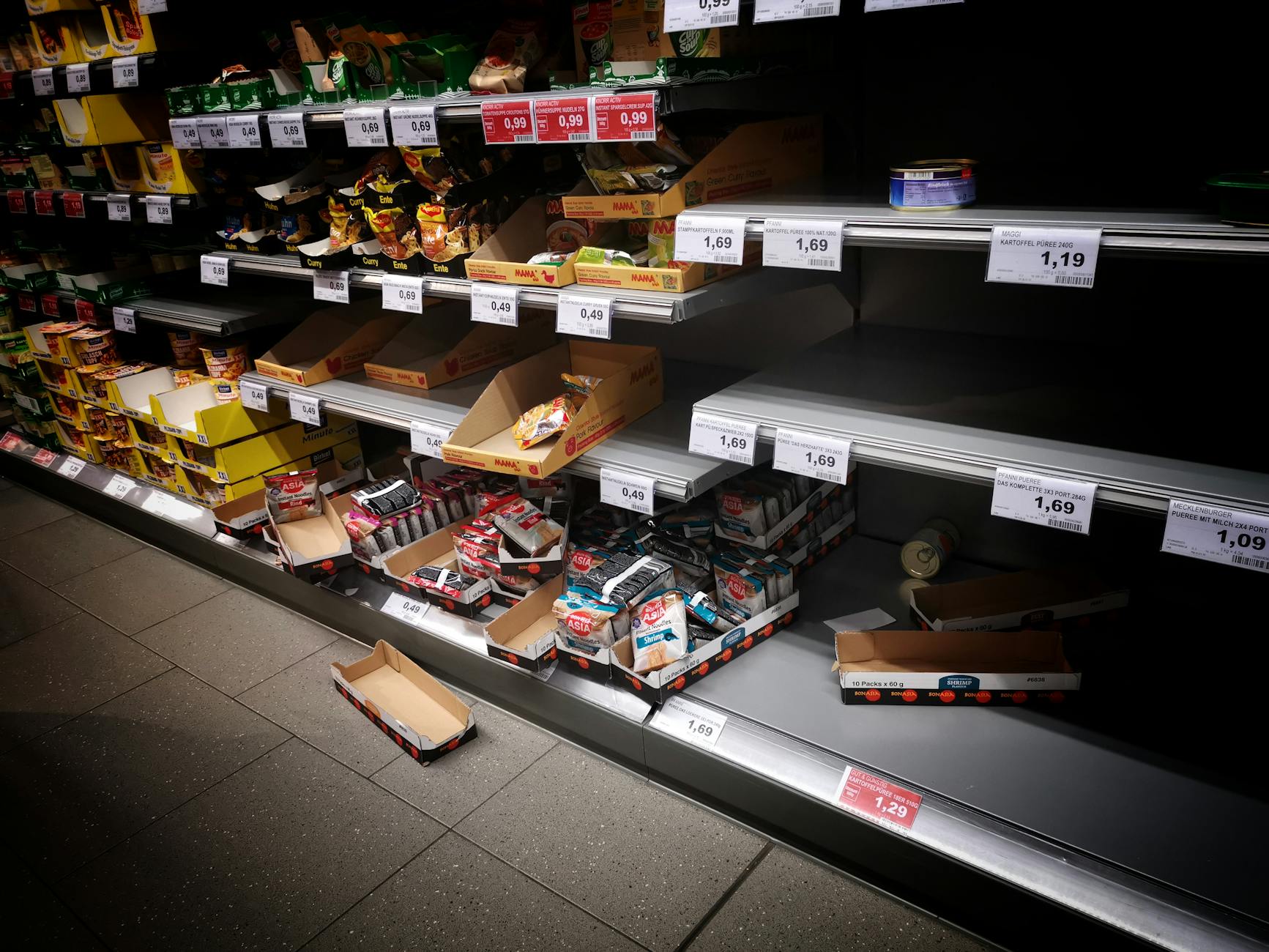
Food supply chains have traditionally relied on manual processes and outdated technologies, resulting in inefficiencies at various stages—including manufacturing, distribution, and stock management. These inefficiencies lead to increased costs and longer lead times, causing delays in delivering products to consumers. In today’s fast-paced world, these shortcomings can hinder a supply chain’s ability to meet consumer demands promptly.
Additionally, traditional supply chains are often plagued by significant food waste and spoilage. Insufficient monitoring and handling practices result in food products expiring before reaching consumers, leading to financial losses and contributing to the global food waste crisis. This situation has financial repercussions and poses environmental challenges, as resources used in food production are wasted. Addressing these issues is essential for developing more sustainable and environmentally friendly supply chains. Artificial Intelligence (AI) is increasingly being utilized to tackle these problems and optimize supply chains.
Digitization of Food Supply Chains
Supply Chain Management (SCM) involves the flow of goods, services, and information from points of origin to customers through a network of interconnected entities and activities. In typical SCM scenarios, it is assumed that factors such as capacity, demand, and cost are known. However, this assumption often does not hold in reality, as uncertainties arise from variations in customer demand, transportation issues, organizational risks, and lead times. Demand uncertainties, in particular, significantly impact supply chain performance, affecting production scheduling, inventory planning, and transportation.
In this context, demand forecasting becomes a crucial strategy to address the uncertainties faced in supply chains. A variety of statistical analysis techniques have been employed for demand forecasting in SCM, including time-series analysis and regression analysis. Traditional methods, such as time series analysis and regression models, are commonly employed to identify trends and seasonality in demand data. Additionally, advanced algorithms like random forests and neural networks can analyze complex datasets to uncover patterns that traditional methods overlook. These models can also adapt to changes in demand dynamics over time.
Recently, advancements in technologies like AI and predictive analytics have emerged as effective tools for generating more accurate predictions. These technologies enhance our understanding of customer needs, facilitate the evaluation of supply chain performance, improve efficiency, reduce response times, and support risk management in supply chains. The increasing need for customer behavior analysis and demand forecasting is driven by globalization, heightened market competition, and the rise of digitization practices in supply chains.
A Data-Driven Approach for Smart Food Supply Chains
Supply chain data is generated in high volumes across numerous points and serves various purposes, reflecting the complexity of interactions among multiple suppliers, products, and customers. This data is high-dimensional and processes many transactions continuously within supply chain networks. Given such complexities, there has been a shift away from conventional demand forecasting methods that rely on identifying statistically meaningful trends from historical data.
Instead, we are moving towards intelligent forecasting systems that learn from historical data and can adapt to predict the constantly changing demands in supply chains. This capability relies on AI, machine learning, and predictive analytics techniques that uncover forecasting rules by identifying the underlying relationships among demand data. By utilizing historical data and advanced statistical methods, organizations can gain insights into future demand patterns, which is essential for effective inventory management and resource allocation.
To maximize the benefits of Artificial Intelligence, it is crucial to integrate intelligent forecasting models with supply chain operations. Incorporating real-time data from IoT devices can enhance the accuracy of forecasts by providing up-to-date information on inventory levels and market conditions. Effective collaboration among all departments—including sales, marketing, and supply chain teams—ensures that these forecasts align with business objectives and market realities.
Leveraging Artificial Intelligence for demand forecasting not only enhances operational efficiency but also supports strategic decision-making. By adopting a data-driven approach, organizations can better navigate the complexities of supply chain management and respond proactively to changing market demands.
Benefits of Smart Food Supply Chain
The need for efficiency and resilience in food supply chains is paramount. Efficiency ensures that resources are used optimally at every stage of the supply chain, minimizing waste and lowering costs. In contrast, resilience is essential for facing the multitude of challenges that food supply chains encounter, such as natural disasters, pandemics, and geopolitical disruptions.
- Enhanced Efficiency: A combination of AI and IoT devices tracks food items in real-time, reducing waste and improving delivery efficiency. By optimizing processes like stock management and logistics, AI significantly enhances the effectiveness of smart food supply chains. AI-powered sensors and monitoring systems track food products from farm to table, providing real-time information about their location, condition, and quality.
- Improved Resilience: AI predicts and mitigates supply chain disruptions, reducing food waste and ensuring a more robust supply system even in challenging situations. It strengthens resilience in smart food supply chains by anticipating and addressing potential disruptions, such as supply chain bottlenecks or disasters. Additionally, AI improves stock management and spoilage prediction, helping to further reduce food waste.
- Sustainability and Environmental Impact: AI minimizes the carbon footprint by optimizing transportation and energy usage, contributing to more sustainable and eco-friendly food supply systems. In smart food supply chains, AI promotes sustainability through environmentally friendly practices, aiding in the reduction of carbon emissions linked to transportation and energy consumption.
Industry Applications of Smart Food Supply Chains
Food supply chains are becoming increasingly digitized and automated through the use of modern technologies such as Artificial Intelligence (AI), Internet of Things (IoT), and Blockchain. These digitization efforts often depend on cloud computing, which can create challenges related to bandwidth overhead, high latency, and issues of security and privacy.
In contrast, Edge AI can enhance scalability and mitigate the security and privacy concerns related to centralized cloud computing. This shift aligns with the provenance and traceability requirements of food supply chains, while also supporting their digitization through these modern technologies. This proposed Edge AI approach to supply chain digitization paves the way for greater resilience in modern digital supply chains.
When used alongside AI, IoT plays a crucial role in smart food supply chains. It enables real-time monitoring and management by collecting information on temperature, humidity, and location. This data allows for effective management of stock and transportation, reducing spoilage and waste. Furthermore, AI coupled with Blockchain and IoT technologies improves supply chain transparency by enabling stakeholders and customers to trace a product’s journey from its source to its destination. This transparency not only ensures food safety and quality but also fosters customer trust in the supply chain, contributing to a more sustainable and responsible food distribution system.
Conclusion
AI is revolutionizing food supply chains, presenting significant opportunities for efficiency and resilience. It optimizes production, distribution, and inventory management, benefiting producers, distributors, retailers, and consumers. AI enhances traceability, transparency, and sustainability, promoting ethical and eco-friendly practices.
Despite the many advantages of digitizing the food supply chain, there are growing ethical concerns surrounding the use of AI in agriculture. These concerns include enforcing sustainable farming methods and promoting equitable access to AI technologies. Ethical AI emphasizes fairness, transparency, and environmental responsibility, ensuring that advancements in agricultural technology benefit all stakeholders while adhering to moral standards in food production.
To create an environmentally friendly and resilient future, stakeholders must prioritize AI integration. Governments should establish supportive regulatory frameworks, and industries should adopt practices that align with ethical and sustainable values. Additionally, funding for worker retraining and upskilling is essential to address concerns about job displacement.
The message is clear: Embrace Edge AI as a transformative force in food supply chains, ensuring that it serves not only economic interests but also ethical, environmental, and social objectives.
Furthermore, the food supply chain consumes substantial amounts of energy, significantly impacting the environment. AI-driven optimization can reduce energy consumption by facilitating information sharing, minimizing energy use, optimizing transportation routes, and lowering greenhouse gas emissions.

 Blog by Neha Mendon