
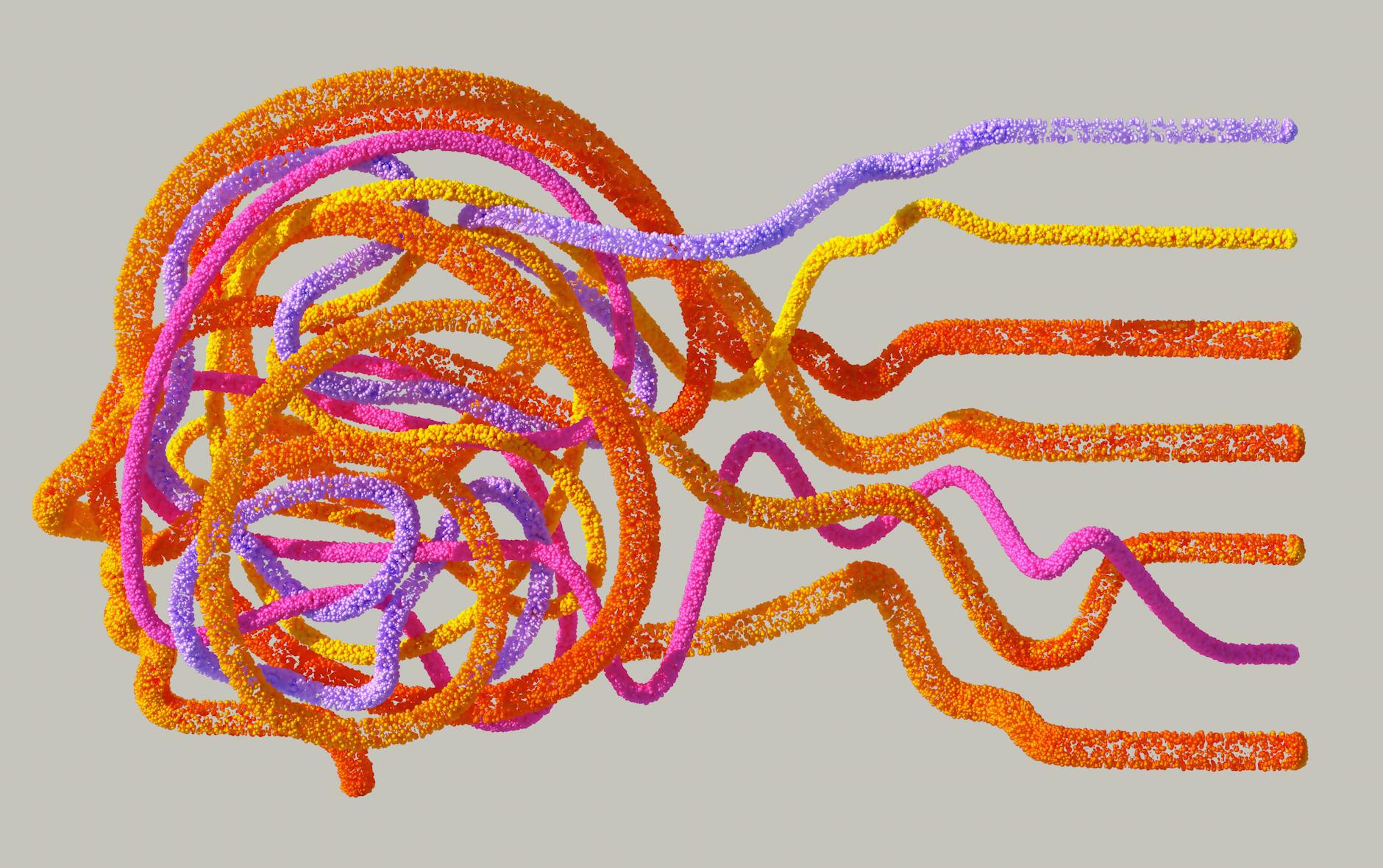
Understanding Deep Learning Concepts
Get ready to be blown away as we dive into the fascinating world of Deep Learning and its amazing applications in RETRENDE. Deep learning is a cutting-edge subset of Artificial Intelligence that mimics the cognitive abilities of the human brain. With its ability to create patterns and make decisions like human, Deep Learning goes beyond traditional task-based algorithms and opens up a whole new realm of possibilities. Through neural networks with multiple hidden layers and nodes, Deep Learning can analyze unstructured and unlabelled data with unparalleled accuracy. So, buckle up and get ready to explore the exciting world of Deep Learning and its incredible potential!
Role of Deep Neural Networks (DNN)
Deep Neural Networks (DNN) play a critical role in identifying and classifying phenomena, recognizing patterns and relationships, evaluating possibilities, and making predictions and decisions. Unlike single-layered neural networks, DNNs have three or more layers, which help refine and optimize outcomes for greater accuracy.
Difference between AI Vs. ML Vs. DL
Although Artificial Intelligence (AI), Machine Learning (ML), and Deep Learning (DL) are sometimes used interchangeably, they are distinct terms. AI is the overarching system, with ML being a subet of AI. DL is a subset of ML that distinguishes itself from conventional machine learning by the type of data it works with and its learning methods. Machine Learning algorithms use structured, labeled data to make predictions, meaning specific features are defined from the input data and organized into labels. On the other hand, Deep Learning eliminates some of the data pre-processing typically involved with machine learning. These algorithms can ingest and process unstructured data, such as text and images, and automate feature extraction, removing some of the dependencies on human experts.
Advantages Vs. Disadvantages
Deep learning has become an industry standard because it can easily learn from massive amounts of unstructured, complex, and unlabelled data. Deep learning models are more powerful than traditional machine learning methods because they can learn from complex relationships between features, which leads to more accurate predictions. Thanks to Graphical Processing Units (GPUs), deep learning models are scalable and can learn from actively generated real-time data. However, deep learning models have similar limitations. For instance, deep learning require a large amount of data to learn from, making it difficult to apply these techniques to problems where there is not a lot of data available. Deep learning models can also be prone to overfitting, which means that they can learn the noise in the data rather than the underlying relationships. As a result, these models can potentially be biased and may lead to inaccurate predictions.
Embarking on Deep Learning Process
Deep learning is a machine learning technique that utilizes a neural network with three or more layers. Deep Neural Networks (DNN) consist of interconnected nodes in multiple layers, each one refining and optimizing the prediction of the previous layer. This progression of computations through the network is called Forward Propagation. The input and output layers of a deep neural network are called visible layers: the input layer ingests the data for processing, and the output layer makes the final prediction or classfication. To train the model, a process called Back Propagation is used to calculate errors in predictions and adjusts the weights and biases of the function by moving backward through the layers. Together, forward and backward propagation allow a Deep Neural Network (DNN) to make predictions, correct any errors, and gradually improve accuracy.
Categorizing Deep Learning Algorithms
Deep learning algorithms are complex and rely on Artificial Neural Networks (ANN) that mimic human information processing. There are different types of neural networks to address specific problems.
Convolutional Neural Networks (CNN)
Convolutional Neural Networks (CNN) are feed-forward neural networks capable of processing structured data arrays. They consist of a convolutional layer, a pooling layer, and an output layer. Image classification models usually have multiple convolutional layers, followed by pooling layers to improve accuracy. CNNs can automatically learn features from raw pixel data, making them ideal for processing large and complex datasets. However, training CNNs requires significant computational resources and extensive datasets. They excel at recognizing patterns, lines, and shapes, and are used for Image Recognition, Computer Vision, and Image Classification tasks.
Recurrent Neural Networks (RNN)
Recurrent Neural Networks (RNN) are different from feed-forward networks as they use the output from the previous phase as input to the current phase and can memorize previous inputs. RNNs are ideal for sequential data as they can store previous samples information to predict future samples. RNNs are based on sequential modeling that captures temporal dependencies and input sequences of varying lengths. However, RNNs struggle with long-term dependencies and can be slow and computationally intensive.
Generative Adversarial Networks (GAN)
Generative Adversarial Networks (GAN) are deep learning algorithms that generate new data instances similar to the input data. GANs consist of a generator, which learns to produce fake data, and a discriminator, which identifies fake data from sample data. During training, the generator creates fake data, and the discriminator quickly distinguishes it. The GAN then sends the results to both the generator and the discriminator to update the model. GANs can learn without labeled data and produce realistic synthetic data, including images, audio, and text. However, GANs can suffer from training instability and limited diversity in generated samples. GANs are used for Image Synthesis, Style Transfer, and Anomaly Detection tasks.
There is a lot of hype around “Deepfakes“, which are videos or audios created using AI to portray something that never happened in reality. “Deepfakes” are created using deep learning algorithms, which can teach themselves to solve problems with large datasets. These deepfakes use the face-swapping technique of Deep Neural Networks (DNN) and Generative Adversarial Networks (GAN) to detect and improve any flaws in the deepfake within multiple rounds, making it difficult for deepfake decoders to decode them.
Exhibiting Deep Learning Applications
Without deep learning, we wouldn’t have self-driving vehicles, chatbots, or personal assistants like Alexa and Siri. Deep learning is the driving force behind many applications that not only automate tasks but also perform analytical and physical tasks without human intervention. In this section, we will explore some of the most popular deep learning applications that will help you unlock the full potential of deep neural networks.
Self-Driving Vehicles
The development of self-driving vehicles has been significantly impacted by deep learning, leading to remarkable advancements in autonomous vehicle technology. Deep learning models, particularly Convolutional Neural Networks (CNN), are highly effective in tasks such as image classification, object detection, and anomaly detection. Computer Vision (CV) technology is utilized in self-driving vehicles to detect objects and avoid collisions through Obstacle Detection and Traffic Sign Recognition. A deep learning system steers the vehicle based on visual input, adapting to various road conditions for Lane Keeping. Self-driving technology is a global effort, with research and deployment taking place across continents. Deep learning plays a pivotal role in self-driving vehicles, making them safer, more efficient, and capable of navigating complex environments.
Smart Agriculture
Deep learning has made significant strides in transforming agriculture by leveraging AI techniques. Smart agriculture involves the application of digital technologies, including deep learning, to enhance agricultural practices and address food security challenges. Deep learning models, such as Convolutional Neural Networks (CNN) and Recurrent Neural Networks (RNN), have been researched and applied in agriculture, enabling data-driven decision-making. Deep learning aids in Precision Agriculture by optimizing crop management by analyzing data from sensors, drones, and satellites. Additionally, RNNs help with Crop Yield Protection by analyzing historical data to project yields, allowing farmers to plan effectively. Deep learning in agriculture is a global phenomenon, with applications across continents. Researchers and practitioners collaborate to enhance food security, sustainability, and productivity.
Field of Finance
Deep learning has had significant impact on the field of finance, revolutionizing how financial institutions operate. Deep learning excels at processing complex data swiftly and handling high-dimensional functions, making it an ideal tool for various financial applications. For example, deep learning is used in Portfolio Management to optimize investment portfolios, Credit Scoring to predict creditworthiness based on historical data and customer behavior, Algorithmic Trading to guide trading decisions using predictive models, and Market Sentiment Analysis by analyzing social media and news sentiment to predict market movements. Researchers often apply hybrid models combining Convolutional Neural Networks (CNN) onto these financial datasets. However, there have been limitations with robust testing, interpretability, and theoretical understanding. Nevertheless, deep learning in finance is global reality, with applications across banking, insurance, and assest management.
Demonstrating Applications in RETRENDE
As the developer of RETRENDE, a cloud-based product that utilizes advanced Machine Learning (ML) and Artificial Intelligence (AI) in a retail, direct-to-consumer, and print-on-demand platform, I can provide some insight into the Deep learning applications used in this product. One of the significant advantages of RETRENDE is that it uses Deep learning models to optimize various aspects of the retail business. For instance:
- Price Optimization: RETRENDE analyzes historical pricing data, competitor prices, and market trends to optimize pricing strategies dynamically. This helps the business to adjust prices for maximum profitability.
- Supply Chain Optimization: RETRENDE uses Deep Learning models to optimize logistics route planning and delivery schedules, ensuring timely and cost-effective product distribution.
- Ad Optimization: RETRENDE uses Deep Learning models to improve online Ad responses without increasing costs. This helps the business to deliver targeted ads that resonate with individual preferences.
- Inventory Management: RETRENDE uses Deep learning models to predict demand patterns, optimize inventory levels, and reduce stockouts. This helps the business to maintain optimal stock quantities, minimize wastage, and enhance supply chain efficiency.
Winding up Deep Learning
Despite concerns about the usage of AI, a recent study found that 65% of consumers still trust businesses that employ AI technology.1 This indicates that when companies use AI responsibly and transparently, they can maintain the confidence of their customers and even leverage AI’s potential to enhance customer experiences. AI can improve accuracy and speed in complex tasks, such as computer vision and decision-making.
The demand for Edge AI is growing as it enables data processing at the point of creation, helping organizations gain real-time insights, detect new patterns, and meet strict data privacy requirements. Leading research reports predict that more than 55% of data analysis using deep neural networks will occur at the point of capture in an edge system by the next decade2. Therefore, organizations should identify the AI applications and training necessary to move to edge environments near IoT endpoints.
Deep learning is expected to converge with other disciplines, such as neuroscience and quantum computing, which will improve our understanding of algorithm performance. Deep learning plays a significant role in the realm of robotics and human-machine interaction, and its application will drive the development of robots and autonomous systems that can communicate and collaborate more intelligently with humans. This breakthrough will open up new possibilities in industrial automation, autonomous transport, and everyday task assistance.
In conclusion, the future of deep learning is exciting, with promising advances and developments. As progress continues in areas such as model architectures, training optimization, interpretability, knowledge transfer, and cross-disciplinary integration, deep learning will remain a driving force of innovation, revolutionizing our interactions with technology in every aspect of life.

 Blog by Neha Mendon